$20 Million Art Auction Decided by Rock Paper Scissors
When Art Meets Chance - It sounds like a plot twist from a quirky indie film, but in 2005, this bizarre yet brilliant moment actually happened in Tokyo.
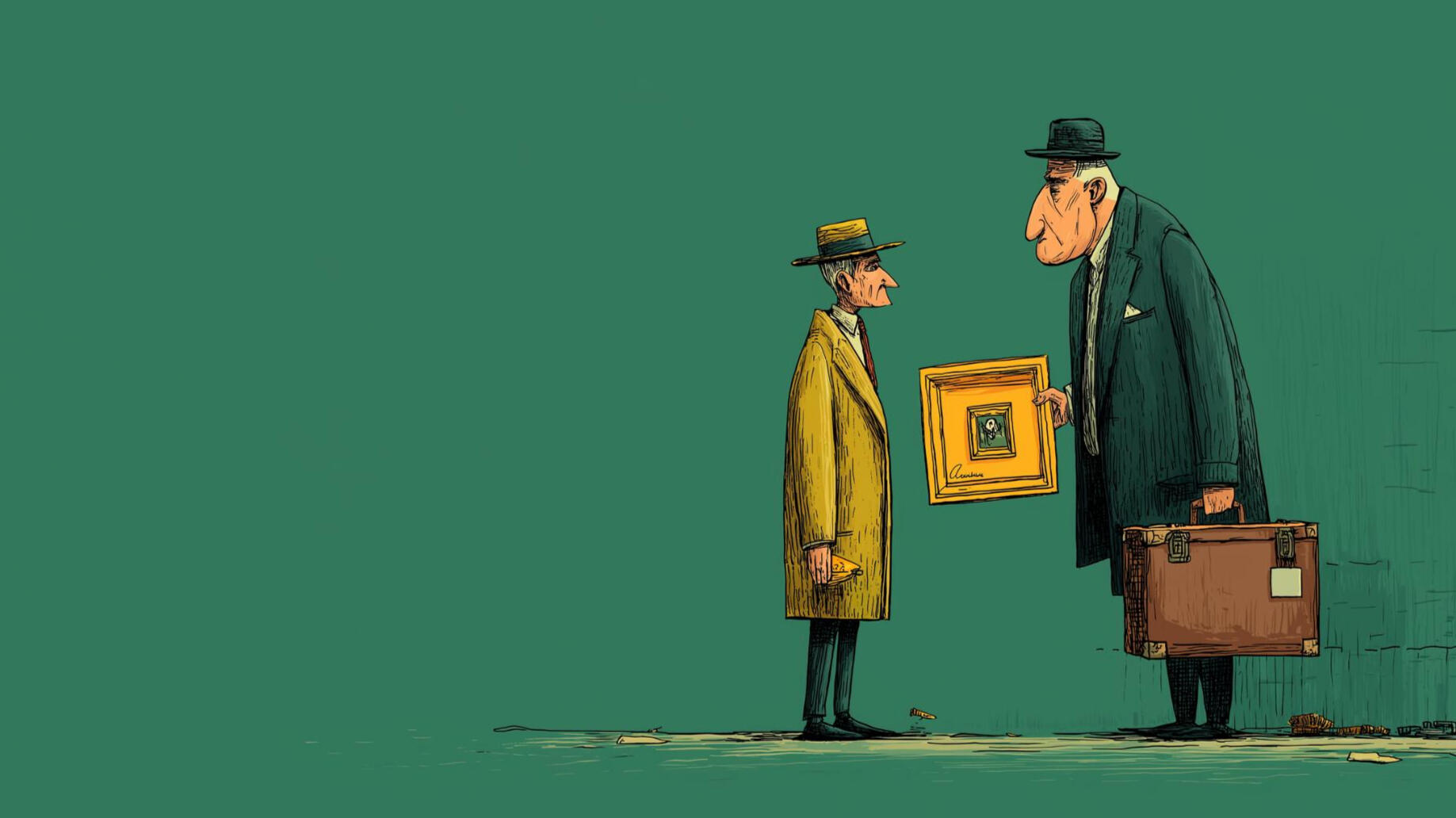
Imagine this: two of the world’s most prestigious auction houses, Sotheby’s and Christie’s, locked in a fierce rivalry over the rights to sell a priceless art collection worth more than $20 million.Negotiations drag on, strategies clash, and then, out of nowhere, the entire deal is settled by a simple game of rock-paper-scissors.
Both Sotheby’s and Christie’s were eager to secure the rights, knowing the auction could rake in tens of millions of dollars and bolster their prestige.
The Prize: A Masterpiece Collection Worth Millions
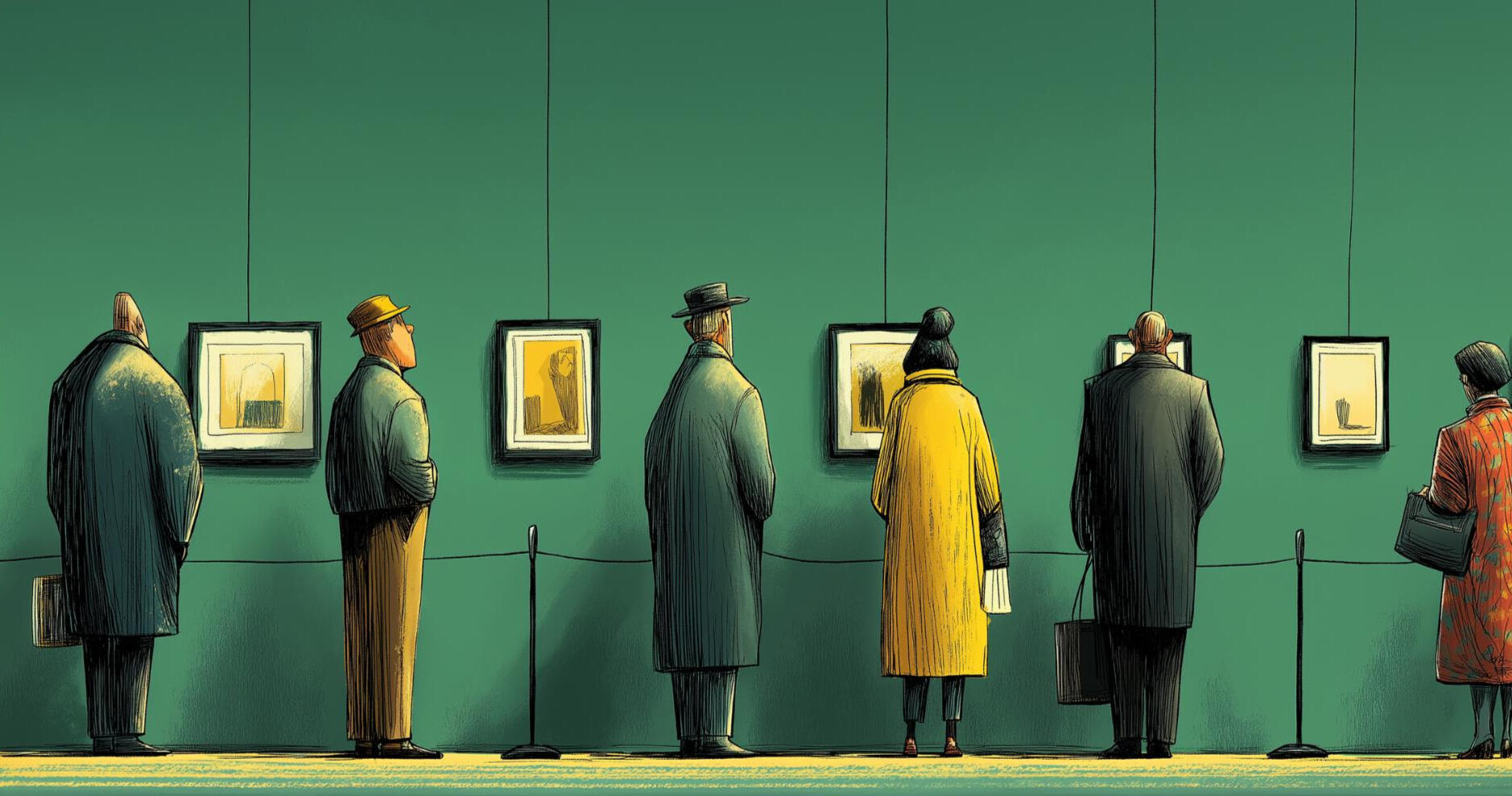
The story begins with Maspro Denkoh, a Japanese electronics company that owned an extraordinary collection of Impressionist and Post-Impressionist masterpieces.Maspro Denkoh decided to sell its prestigious European art collection in 2005, primarily to fund the acquisition of Japanese ceramics, signaling a shift in the company’s collecting interests.The collection, which included masterpieces by Cézanne, Picasso, and Van Gogh, had been assembled over the years under the leadership of Takashi Hashiyama, the company president.By the mid-2000s, with business lagging and an opportunity to realize a tidy profit on these high-value works, Hashiyama saw the timing as ideal for a sale.Rather than simply splitting the collection or pursuing private sales, he opted for a public auction to maximize returns and visibility.Both Sotheby’s and Christie’s were eager to secure the rights, knowing the auction could rake in tens of millions of dollars and bolster their prestige. But the negotiations quickly hit a stalemate.Takashi Hashiyama, the Maspro Denkoh executive in charge, found himself in a quandary. Both Sotheby’s and Christie’s presented compelling offers, but neither could decisively outshine the other.How to choose between two equally matched titans?
The Solution: Rock-Paper-Scissors
In a move that stunned the art world, Hashiyama decided to settle the matter with a game of jan-ken-pon, the Japanese version of rock-paper-scissors.This childhood game, often dismissed in the West as a trivial playground pastime, holds a much deeper cultural significance in Japan.It’s seen as a fair, decisive, and honorable way to resolve disputes without bitterness or drawn-out conflict.Hashiyama’s choice was met with a mix of disbelief and amusement by Sotheby’s and Christie’s. Yet, both houses agreed. After all, the stakes were high, but the rules were clear. If you can’t outbid or outmaneuver your rival, sometimes you just have to play your hand (or your rock, paper, or scissors).
Strategy vs. Chance
What followed was a fascinating study in contrasts. Sotheby’s took a laissez-faire approach, treating the game as pure luck. Christie’s, however, went all in on strategy.They consulted 11-year-old twins, Yuki and Emi, who were considered experts in the game. The twins analyzed patterns, psychology, and probability, ultimately advising Christie’s to throw scissors.The twins’ reasoning was simple yet clever: beginners tend to start with rock, so scissors would beat that. They also believed that the opponent might expect this and try to counter with rock, so the twins suggested that Christie’s players commit to scissors regardless, trusting in the psychological edge.Christie’s even incorporated good luck rituals, hoping to tip the scales in their favor. Sotheby’s, meanwhile, maintained a calm, almost Zen-like acceptance of fate.
The Showdown in Tokyo
The decisive moment came in Maspro Denkoh’s Tokyo office. Representatives from both auction houses wrote down their choices on pieces of paper, sealed them in envelopes, and then revealed them simultaneously.The tension was palpable. Here were two corporate behemoths, millions of dollars on the line, and the outcome resting on a child’s game.Christie’s threw scissors. Sotheby’s threw paper. Christie’s won.
The Aftermath
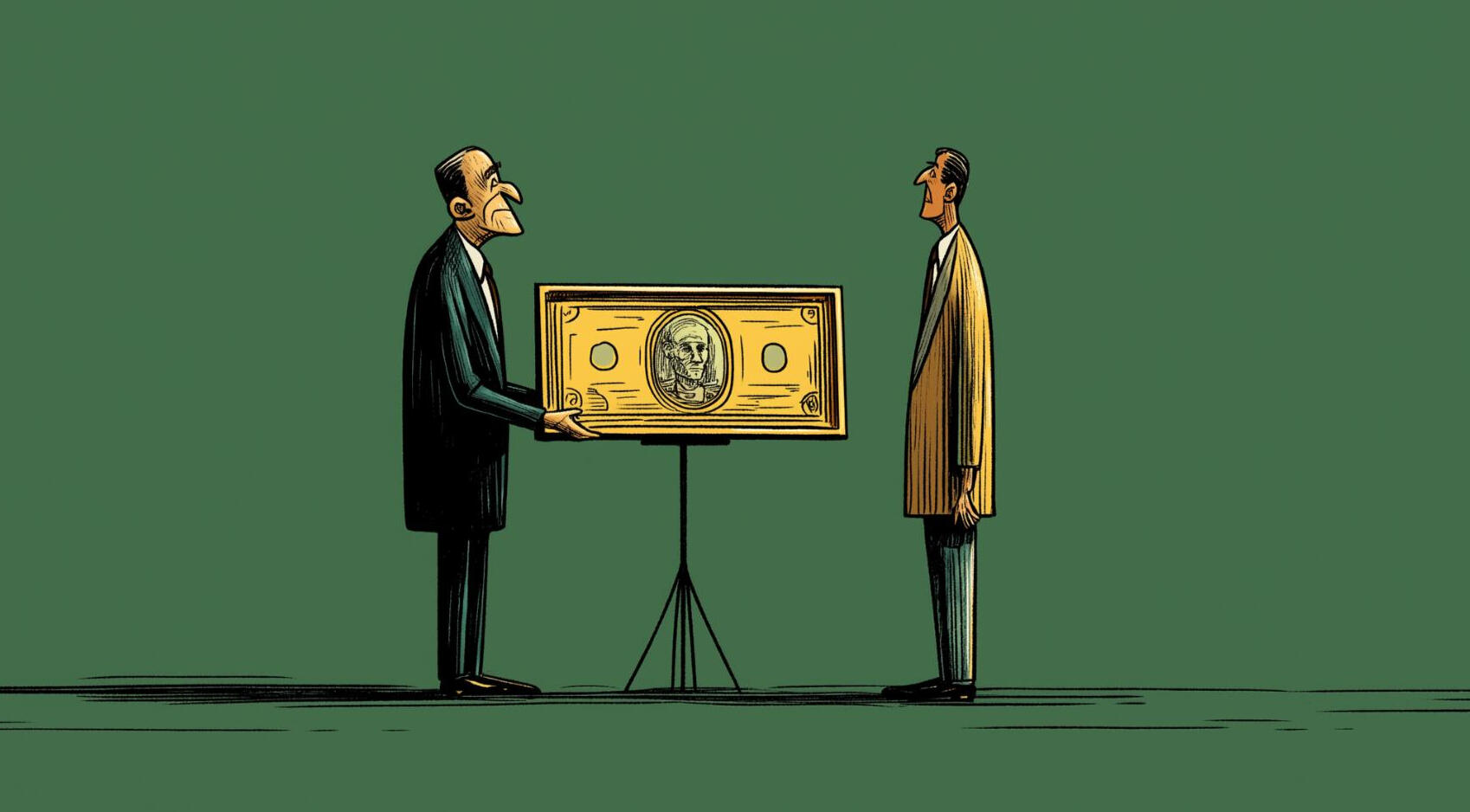
With the Christie’s team victorious in the now-legendary rock-paper-scissors showdown, the art world’s attention shifted to the auction block.The Maspro Denkoh collection was consigned to Christie’s for their May 2005 Impressionist and Modern Art sales in New York, and anticipation was sky-high.The collection featured a dazzling lineup: works by Cézanne, Picasso, Van Gogh, Gauguin, Renoir, Bonnard, Chagall, and Pissarro. The undisputed star was Paul Cézanne’s Les Grands Arbres au Jas de Bouffan (“The Large Trees at Jas de Bouffan”), a lush landscape that had been acquired by Maspro Denkoh in 1996 for $7.9 million.On auction night, Les Grands Arbres au Jas de Bouffan soared to $11.8 million, making it the third-highest lot of the evening and netting Maspro Denkoh a handsome profit.Picasso’s Boulevard de Clichy fetched $1.7 million, while Van Gogh’s Vue de la chambre de l’artiste, rue Lepic (View from the Artist's Window, Rue Lapic) exceeded expectations and sold for $2.7 million.The total proceeds for the collection reportedly topped $20 million, a resounding success for both the seller and Christie’s, who earned millions in commissions and global prestige.The auction’s triumph cemented Christie’s victory not just in the game, but in the fiercely competitive art market.The story of how a child’s game decided the fate of masterpieces quickly became art world legend, retold in business schools, negotiation seminars, and cocktail parties alike.It challenged the seriousness of high finance, proving that sometimes, even in the rarefied air of multimillion-dollar deals, a little luck and a pair of scissors can make all the difference.
Psychology and Culture Behind the Game
Rock-paper-scissors isn’t just a game of chance; it’s a fascinating blend of psychology, strategy, and cultural tradition. In Japan, jan-ken-pon is more than a child’s pastime, though it is also a respected method of conflict resolution.Game theory experts have studied rock-paper-scissors extensively, noting that while it’s often treated as random, players unconsciously reveal patterns. The Christie’s twins tapped into this insight, turning what seemed like a game of luck into a calculated gamble.
Rock-Paper-Scissors in the Limelight
Rock-paper-scissors has a knack for sneaking into the spotlight in the most unexpected ways. The Christie’s vs. Sotheby’s art auction is just one chapter in a surprising history of the game making headlines.For example, the World Rock Paper Scissors Society has hosted professional tournaments since the early 2000s, drawing competitors from across the globe and even securing broadcast deals with major networks.In 2004, Lee Rammage took the crown at the World Championships in Toronto, while Andrea Farina from Italy became a legend after his victory in 2006, inspiring a new generation of competitive players.The game has also found a home in the high-stakes world of Las Vegas casinos, where tournaments with prize pools reaching $100,000 have attracted both amateurs and pros, all vying for the title of champion and the cash that comes with it. These events are broadcast live and have turned what was once a playground pastime into a serious spectator sport.
Michael Jordan’s High-Stakes Games
Michael Jordan’s competitive spirit didn’t just shine on the basketball court; it extended into some pretty wild gambling habits, including high-stakes games of rock-paper-scissors.According to Jay Williams, a former Chicago Bulls teammate, Jordan once wagered an eye-popping $100,000 on a single round of rock-paper-scissors during his NBA career.This wasn’t casual fun; it was serious business, with bets often starting at $20,000 per round and escalating quickly as players tried to outwit or simply outlast each other.Williams shared on The Brilliant Idiots podcast how the Bulls’ plane rides and downtime were often filled with gambling, with Jordan at the center of the action.“Why are you messing with Brand Jordan? He can’t lose,” Williams recalled thinking, given Jordan’s immense wealth and confidence. Yet, Jordan’s stubbornness and love for the game meant he’d keep pushing the stakes higher, challenging teammates to “bet it back” even when the amounts became staggering.Jordan’s larger-than-life persona, his fierce competitiveness, his willingness to take risks, and his uncanny ability to turn even a simple childhood game into a high-stakes showdown are a reminder that for MJ, everything was a contest, whether it was slam dunks or scissors cutting paper.
Final Thoughts
The 2005 art auction settled by rock-paper-scissors stands as a quietly remarkable moment in the history of both the art market and business decision-making. What might have seemed like a whimsical or even trivial solution was, in fact, a practical response to a genuine impasse between two equally qualified auction houses.Takashi Hashiyama’s decision reflected both cultural tradition and a desire for fairness, and the willingness of Christie’s and Sotheby’s to participate demonstrated adaptability in the face of unconventional circumstances.The auction itself was a financial success, with significant works finding new homes and the seller achieving his goals.Beyond the headlines, the episode has been studied in business schools and negotiation seminars as an example of how, sometimes, when logic and expertise cannot break a deadlock, a simple, transparent method can move things forward.The story also highlights the global nature of the art market and the ways in which different cultural practices can shape business outcomes.Today, the Maspro Denkoh auction is remembered not for controversy or spectacle, but for its demonstration of openness to new solutions and respect for process. It remains a testament to the idea that even in high-value transactions, fairness and clarity can guide the way.
© All rights reserved.